Measure both sides
A single-leg number means nothing without the other leg next to it. Every test is a comparison, including the first one.
Two clinicians, private rooms, testing gear in the same space as the treatment table. Deliberately small, because the standard is easier to hold that way.

Peter Schultz and Alan Diamond met covering the same Midtown clientele from opposite sides of the city: office workers who still competed on weekends, college athletes home for the summer, dancers and runners who had been told to rest and had run out of patience with that answer.
They shared a treatment table on the fifth floor of 8 West 36th Street before they shared a name on the door. The practice exists because both of them kept writing the same complaint in their notes: the athlete had been treated, but nobody had measured whether the injured side had caught up.
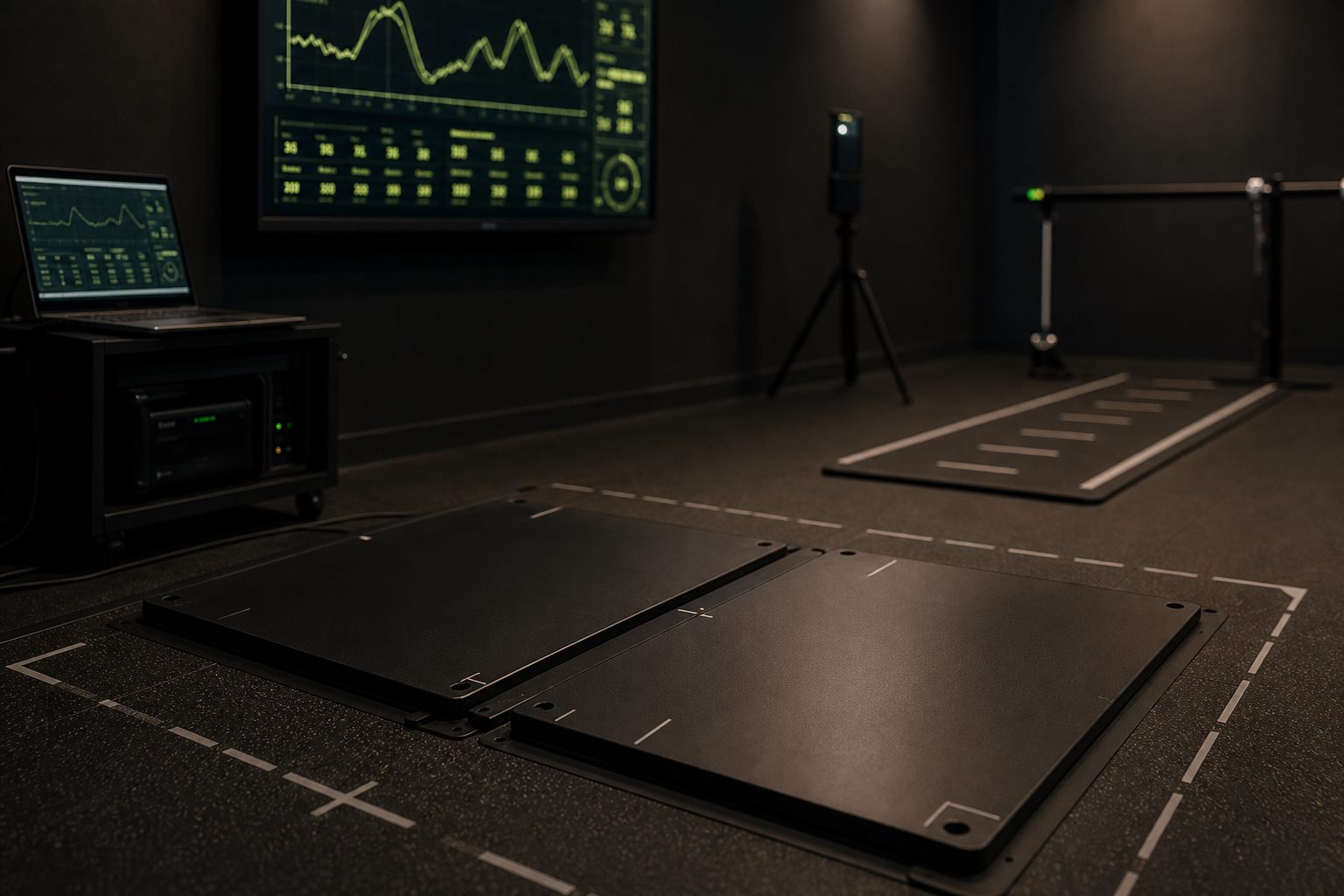
So the measuring came first. Force plates, a timing gate, a testing battery that runs the same way every time, and a rule that no phase change happens on a hunch.
There is no rotating pool of aides. Whoever starts your file finishes it, and the other clinician knows it well enough to cover a session if a schedule collapses.
Owner. Peter carries the post-operative knee and Achilles caseload and signs off return-to-play testing. He is the one who will tell you that week nine is not week fourteen, no matter how good you feel on the day.
Co-founder and clinical director. Alan built the testing battery and looks after overhead athletes and running mechanics. If your shoulder loses rotation by the fourth inning, this is the file he wants.
Not a gym with a therapist attached, and not a clinic that runs four people through one hour. If you need a high-volume in-network mill, we will say so and point you somewhere honest about it.
A single-leg number means nothing without the other leg next to it. Every test is a comparison, including the first one.
You learn what has to be true to leave a phase on the day you enter it. No moving goalposts halfway through.
If the gap is still 18% two weeks before a tournament, you hear that from us rather than from a re-injury.
The programme is written so you can run it without us. Discharge is the point of the whole exercise.
The floor plan puts the testing lane, the racks and the treatment tables in one space, so a session can move from hands-on work to loading to a retest without booking another appointment or another room.
Private rooms are available for treatment; the testing lane is shared and usually has one athlete on it. If you would rather not train in front of anyone, say so when you book and we will schedule you at a quiet hour.
You do not need a diagnosis to start. Book the screen, get your numbers, and decide what you want to do about them with someone who will read them out loud.